Integrated Pest Management: A Sustainable Approach to Crop Protection
As farmers face increasing challenges from pests, climate change, and environmental degradation, Integrated Pest Management (IPM) offers a smarter and more sustainable solution. IPM is an ecosystem-based approach that combines different pest control methods to protect crops while minimizing environmental impact.
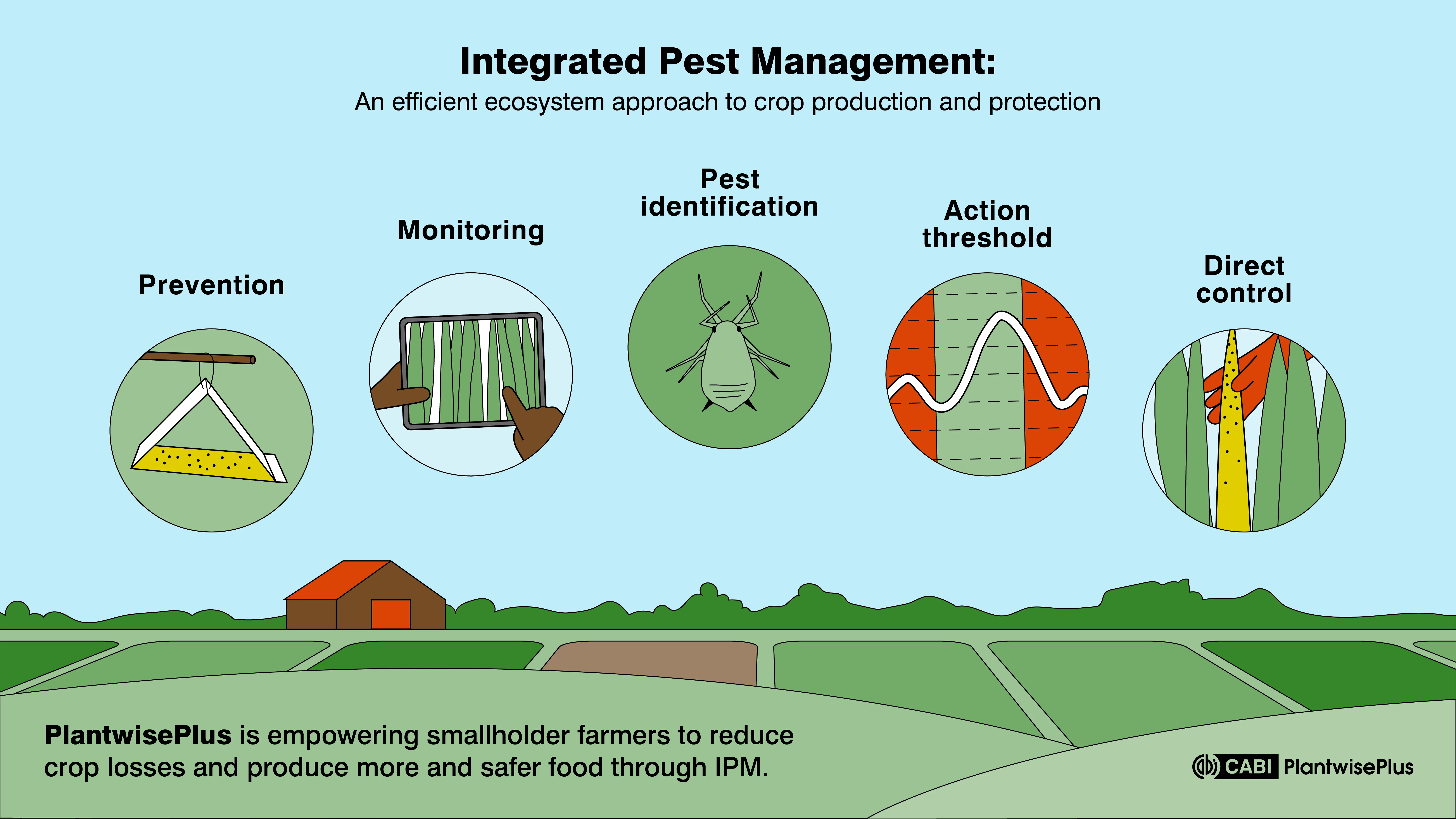
The IPM process involves five key steps:
- Prevention: Using practices such as crop rotation, resistant varieties, and proper field management to reduce pest problems before they occur.
- Monitoring: Regularly observing fields and tracking pest populations.
- Pest Identification: Correctly identifying pests to avoid unnecessary treatments and protect beneficial organisms.
- Action Threshold: Taking control measures only when pest populations reach levels that can cause significant economic damage.
- Direct Control: Applying the most effective and environmentally friendly control methods, with pesticides used only when necessary.
By focusing on prevention and informed decision-making, IPM helps farmers reduce crop losses, lower production costs, protect biodiversity, and improve food safety. Initiatives such as PlantwisePlus are supporting smallholder farmers worldwide in adopting IPM practices to produce more food sustainably while protecting natural resources.
Integrated Pest Management is not just about controlling pests—it's about creating resilient agricultural systems that support both productivity and environmental sustainability.